The information on this website is for informational purposes only and is not a substitute for professional medical advice, diagnosis, or treatment. Always seek the advice of your physician regarding any medical condition. Never disregard professional medical advice or delay seeking it because of something you have read here. If you have a medical emergency, call 911 immediately.
Men’s health screenings are mostly quick and cheap. The ones men skip the longest are blood pressure, cholesterol, blood sugar, colon cancer, and a prostate talk.
Men also reach for care less often than women do. According to the CDC’s National Center for Health Statistics (2026), 87.1 percent of men had a usual source of health care in 2024, compared with 93.3 percent of women. Only 72.6 percent of men named a doctor’s office or health center, against 82.2 percent of women. That gap is where quiet problems sit for years.
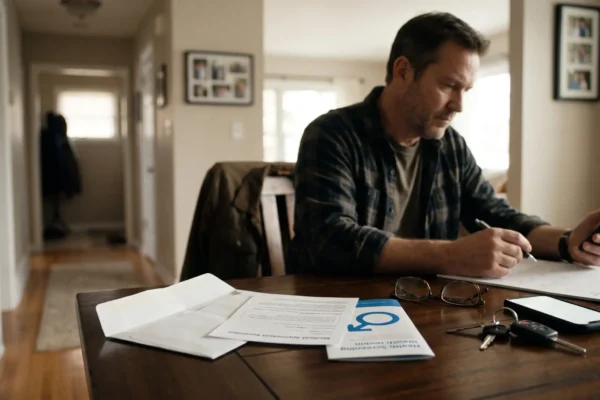
Why Do Men Skip Doctor Visits?
None of those are foolish. A man who feels fine has no symptoms to point at, so the appointment feels like paying for a conversation he did not need. The problem is that the conditions screening catches early are silent by nature. They do not hurt until they have had years to build.
There is also the fear of being sent home with nothing. Plenty of men have left an appointment with advice to sleep more and cut back on coffee, and that memory lasts a long time. It is a fair worry, and there is a practical answer to it further down this page.
What Does an Annual Physical for Men Include?
Blood Pressure Comes First
A reading taken in a clinic room can also run high simply because you are in a clinic room. Dr. Cleo Williams covers that in her piece on white coat syndrome, which matters here because one high number is not a diagnosis. A repeat check on a different day usually sorts out which it is.
Cholesterol and Blood Sugar
Blood sugar is the result that surprises men most. The CDC (2024) estimates that about 115 million American adults have prediabetes, more than 2 in 5, and 8 in 10 of them do not know. It shows up on a routine panel long before anyone feels thirsty, tired, or unwell.
The Parts That Are Just Conversation
The table below is the short version of the schedule, taken from the MedlinePlus and CDC pages linked in this article. Family history, weight, past readings, and race can all move a start date earlier, so read it as a default rather than a rule for everyone.
| Screening | Usual starting point | How often |
|---|---|---|
| Blood pressure | Any adult | At least once a year |
| Cholesterol | Age 20 | Every 4 to 6 years |
| Blood sugar | Age 35 if overweight | Every 3 years |
| Colon cancer | Age 45 | Yearly stool test, or colonoscopy every 10 years |
| Prostate (PSA discussion) | Age 55 | Decided with your doctor |
Dates in the table are starting points for men at average risk. A man with a parent who had colon cancer, or a brother treated for prostate cancer, usually begins earlier and is checked more often.
Colon Cancer Screening Now Starts at 45
There is also a choice of method, which few men know. A stool test done at home every year is one route. A colonoscopy every 10 years is another. A stool DNA test every 3 years and a CT scan every 5 years sit in between. A positive stool test then needs a colonoscopy to complete the screening.
The home test is the part worth repeating. No preparation, no sedation, no day away from work, and it comes in the mail. For a man who has been avoiding the subject for a decade, that is a reasonable place to start rather than booking a procedure.
Prostate Exam and PSA Test: What Age Should You Start?
What the PSA Test Can and Cannot Tell You
The CDC page Should I Get Screened for Prostate Cancer? (2026) sets out three things to weigh: whether your own risk is above average, whether other health problems would make treatment hard or less worthwhile, and how you personally feel about the possibility of being treated for something harmless.
Why Prostate Check Up Age Is Not a Fixed Rule
A digital rectal exam is also no longer automatic. Some clinicians still include it, many do not, and it is not the centerpiece either way. If that exam is the thing that has kept you away, say so when you book and ask what the appointment will actually involve.
If a result does need following up, the next stop is usually a urologist. Dr. Cleo’s explainer on what a doctor referral to a specialist really means walks through how that handoff works, which takes some of the dread out of an unexpected number.
Is It Worth Going If Nothing Hurts?
Feeling healthier than most men your age may well be accurate. It still says nothing about a number on a blood panel. Being fit and a healthy weight lowers risk, and it does not rule out a reading that needs attention this year rather than in five years.
There is a second reason to go while you feel well. A baseline set of numbers makes any later change obvious at a glance. Without one, a doctor meeting you for the first time at 62 has nothing to compare today’s results against.
What If the Doctor Says It Is Just Stress?
Normal results do not always mean nothing is wrong, either. Dr. Cleo’s article on normal labs but extreme fatigue covers what to do when the panel comes back clean and you still feel flattened, including which further tests are reasonable to ask about.
You are also allowed to ask directly. Which conditions have been ruled out, which have not, and what the plan is if this does not settle within a month. Three questions like that move an appointment from reassurance to an actual plan.
Does a Checkup Have to Be Expensive or Slow?
Speed is often the bigger obstacle. A routine physical can sit weeks out while an urgent slot opens the same week, so men who decide to get checked sometimes give up at the scheduling stage. Ask whether there is a cancellation list, because most practices keep one and rarely mention it.
For men who cannot take a morning off, a visit at home is worth knowing about. House call doctors explain what can and cannot be done outside a clinic, including a blood pressure check and a blood draw for the panels above.
How to Start Again After Years Away
A first appointment back is mostly information gathering. Expect a conversation, a blood pressure reading, and an order for blood work, with the results discussed at a short follow-up. Annual Physical Exam: Where to Start After Years Away sets out that sequence in more detail.
Dr. Cleo Williams sees men in Pasadena and across the San Gabriel Valley who have not had a physical in a decade, and a visit like that is built around the gap rather than around a lecture. When you are ready, you can book an appointment and start with the numbers.
Frequently Asked Questions
Can I get most of these screenings done in one visit?
Usually yes for the blood pressure check and the blood work, since a single draw covers cholesterol and blood sugar. A colonoscopy is scheduled separately, and a home stool test is mailed to you. Ask for everything you are due in one order so you are not making extra trips.
Do I need to fast before men’s blood work?
Often, though not always. Many cholesterol and glucose panels are now read without fasting, while some practices still prefer it. Ask when you book rather than guessing, because arriving unfasted for a fasting panel usually means coming back another morning.
What if my blood pressure is high only at the doctor’s office?
That is common enough to have its own name. A clinician will usually ask you to take readings at home over a week or two before deciding anything. A simple home monitor and a notebook settle most of these cases without any treatment.
Is a testicular exam part of a physical routine?
Not always, and it depends on age and symptoms. Testicular cancer is most common in younger men, so it is worth raising if you have noticed a lump, a feeling of heaviness, or a change in size. Mention it when booking so there is time in the slot.
How do I know which screenings I have already had?
Ask the practice for your records, or check your patient portal for past lab dates. If your care has been spread across walk-in clinics and emergency rooms, those dates are usually scattered, and settling with one primary care office is what fixes it going forward.
Should I mention things that feel unrelated to a physical?
Yes, especially sleep, alcohol, mood, and anything sexual. Those are often the first visible signs of a blood pressure, blood sugar, or hormone problem, and leaving them out removes the clues that explain the numbers on the page.
Sources Used
High Blood Pressure Facts – Centers for Disease Control and Prevention (2026)
Preventing Type 2 Diabetes – Centers for Disease Control and Prevention (2024)
Screening for Colorectal Cancer – Centers for Disease Control and Prevention (2026)
Should I Get Screened for Prostate Cancer? – Centers for Disease Control and Prevention (2026)
Source of Usual Health Care for Adults Age 18 and Older: United States, 2024 – National Center for Health Statistics, NCHS Data Brief No. 558 (2026)