The information on this website is for informational purposes only and is not a substitute for professional medical advice, diagnosis, or treatment. Always seek the advice of your physician regarding any medical condition. Never disregard professional medical advice or delay seeking it because of something you have read here. If you have a medical emergency, call 911 immediately.
If your blood pressure reads high at the doctor’s office but normal at home, you may have white coat syndrome. It is common, and it is measurable.
According to the CDC (2026), as many as 1 in 3 people who get a high blood pressure reading at a doctor’s office have normal readings outside of it. The number from the exam room is a snapshot. A snapshot can mislead, in either direction.
Plenty of people in Pasadena and the San Gabriel Valley sit down for a routine visit and see a number they never see at home. Knowing why that happens, and what to do about it, keeps a single reading from steering your care.
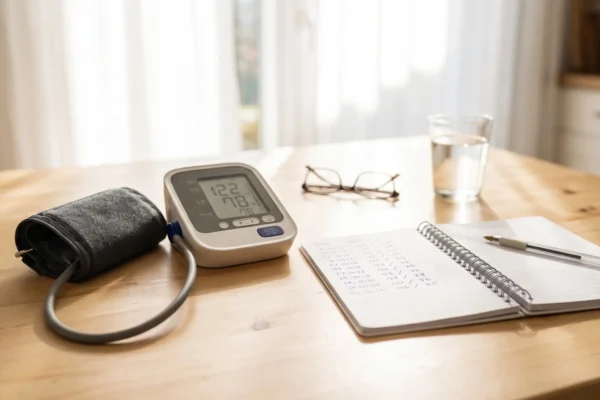
What Is White Coat Syndrome, and How Common Is It?
High blood pressure is widespread, which is why the question comes up so often. CDC data (2026) puts it at 48.1% of US adults, about 119.9 million people, and reports that only about 1 in 4 of those adults has it under control.
So a high office reading is taken seriously, and it should be. The useful next step is finding out whether that number holds up when nobody in a white coat is watching. That answer, not the single reading, is what decides whether anything in your care needs to change.
Why Does Your Blood Pressure Spike at the Doctor's Office?
The Fight-or-Flight Response
What You Did in the Hour Before
How Much a Bad Setup Can Add
| What Went Wrong During the Reading | How Much It Can Raise the Number |
|---|---|
| Full bladder | Up to 33 mmHg |
| Arm hanging instead of supported at heart level | Up to 20 mmHg |
| Talking during the measurement | Up to 19 mmHg |
| Legs crossed at the knees | Up to 15 mmHg |
Those effects stack. Someone who hurried in, held a full bladder, crossed their legs, and chatted through the cuff can post a number that has little to do with their real blood pressure. It is fair to ask whether the setup was right before accepting the result.
What Counts as Normal Blood Pressure, and What Does Not?
The American Heart Association (2025) sorts the rest into clear categories: elevated at 120 to 129 systolic with diastolic under 80, stage 1 at 130 to 139 systolic or 80 to 89 diastolic, and stage 2 at 140 or higher or 90 or higher.
One number above a line does not make a diagnosis. Blood pressure moves through the day, rises with activity, and settles with rest, so a single high reading is a reason to measure again rather than a verdict. Where it sits across many readings is the figure that counts.
Is White Coat Hypertension Dangerous or Harmless?
Mayo Clinic (2024) notes that white coat hypertension may raise the risk of developing long-term high blood pressure, and that people who have it may carry a higher risk of heart and blood vessel disease and organ damage than people with steady, ideal readings.
There is also the opposite pattern, called masked hypertension, where office readings look fine while readings elsewhere run high. That one is easier to miss, because nothing in the appointment flags a problem, and it is worth ruling out. Both patterns point to the same fix: measuring outside the clinic.
Existing conditions change how closely the numbers get watched. Someone managing diabetes, for example, has blood pressure targets woven into the rest of their care, as the overview of type 2 diabetes management describes. None of this means a spike at the office is an emergency. It means the pattern deserves a real answer.
How Do Doctors Tell White Coat Syndrome From Real High Blood Pressure?
A 2026 review of the 2025 AHA/ACC hypertension guideline describes out-of-office measurement as a cornerstone of diagnosis, with both home monitoring and 24-hour ambulatory monitoring recommended to confirm a diagnosis. The same review notes that excluding the white coat effect is considered critical before treatment is intensified.
Ambulatory monitoring means wearing a small device that takes readings automatically through a normal day and night. Home monitoring means checking yourself on a schedule your doctor sets. Both answer the same question: what does your blood pressure do when life is ordinary?
Dr. Cleo works from that pattern rather than from one number on one morning. A week or two of home readings usually says more than a dozen hurried measurements in a waiting room, and it also shows how your blood pressure behaves at different times of day, which a single appointment can never reveal.
How Do You Measure Blood Pressure at Home the Right Way?
Choosing a Home Blood Pressure Monitor
Setting Up Each Reading
- Skip food, drink, caffeine, and tobacco for 30 minutes beforehand
- Empty your bladder
- Sit in a chair with your back supported for at least five minutes
- Keep both feet flat on the floor and your legs uncrossed
- Rest the cuffed arm on a table at chest height
- Put the cuff on bare skin, snug but not tight
- Stay quiet while the cuff inflates
Measure at the same time each day and write every result down, including the ones you do not like. A log of ordinary mornings is far more useful to your doctor than a handful of readings taken when something felt wrong.
When Getting to the Office Is the Hard Part
What If an Office Reading Leads to Treatment You May Not Need?
Treating a reading that only appears in the exam room can push blood pressure too low in daily life, which brings its own problems, including dizziness and falls. The guideline review cited above makes the same point from the clinical side: the white coat effect should be ruled out before treatment is stepped up.
This is where having one doctor who knows your history pays off. A clinician tracking your numbers over years reads a single outlier differently than someone meeting you for the first time, which is part of what a primary care physician actually does.
Dr. Cleo looks at home logs alongside office readings before changing anything. When the two disagree, that disagreement is useful information, and it usually points to a next sensible step rather than a prescription. Patients are welcome to bring their own monitor and their own notes into that conversation.
Can You Ask for a Second Reading at the End of Your Visit?
Ask when you arrive so it can be built into the visit. A short wait, a few quiet minutes, and a correct sitting position are all it takes. Many offices do a second reading routinely when the first is high.
If it has been years since your last check-up, expect blood pressure to be measured more than once as part of a fuller workup. The walk-through of where to start after years away from care covers what that first appointment usually includes.
Bringing Your Numbers to Your Next Visit
Dr. Cleo T. Williams sees patients across Pasadena and the San Gabriel Valley and works through blood pressure questions the slow way, with readings from real life rather than one tense morning. If a high office number has been hanging over you, you can book a visit here.
Frequently Asked Questions
Does white coat syndrome affect other measurements too?
It can. The same stress response that lifts blood pressure also speeds up the heart rate, so a pulse taken in the first minutes of a visit may read higher than usual. Resting quietly before measurements helps both numbers settle.
Can a pharmacy blood pressure machine replace a home monitor?
It can be a useful backup, especially if you do not own a monitor yet. The main limitation is cuff size, since those machines use one fixed cuff that may not fit every arm well. For tracking over weeks, your own validated monitor is more consistent.
Should readings be taken on both arms?
Either arm usually works, and the difference between them is normally small. A consistently large gap between arms is worth mentioning to your doctor, since it can point to something that deserves a closer look.
Does white coat syndrome fade once you know your doctor?
Not always. Many people keep getting higher office readings for years, even with a clinician they trust and see regularly. That persistence is one reason home readings stay part of the plan rather than being a one-time check.
What should go in a home blood pressure log?
The date, the time, both numbers from each reading, and which arm you used. Adding a short note about anything out of the ordinary, such as poor sleep or a stressful morning, helps explain the outliers later.
Are wearable cuffless blood pressure trackers reliable?
Not for diagnosis at this point. Current guideline reviews say the evidence for cuffless devices is mixed and they are not recommended for diagnosing or managing high blood pressure. A cuff on the upper arm remains the standard.
Sources Used
Home Blood Pressure Monitoring – American Heart Association (2025)
Measuring Your Blood Pressure – CDC (2026)
The rules for measuring blood pressure – and why they exist – American Heart Association (2024)
Updates in the 2025 AHA/ACC Hypertension Guideline – Current Hypertension Reports (2026)
White coat hypertension: When blood pressure rises in a medical setting – Mayo Clinic (2024)
How to choose a blood pressure monitor – BHF (2024)
White-coat hypertension: A cause for concern? – Harvard Health (2025)