The information on this website is for informational purposes only and is not a substitute for professional medical advice, diagnosis, or treatment. Always seek the advice of your physician regarding any medical condition. Never disregard professional medical advice or delay seeking it because of something you have read here. If you have a medical emergency, call 911 immediately.
The image of a doctor arriving at the front door with a black bag feels like something from an old film. Yet a home visit doctor is very much a part of modern medicine, and interest in in-home care has grown as more people look for ways to receive medical attention without a stressful trip to a clinic. If you have been searching for what a house call doctor actually does, who benefits, and how in-home care fits alongside a regular clinic, this guide walks through the essentials in plain language.
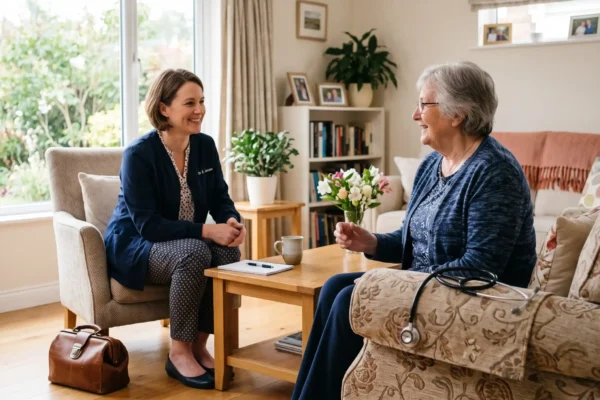
What Is a House Call Doctor?
For families, the appeal is often as much about comfort as convenience. An older parent who becomes anxious or confused in a busy waiting room may do far better at the kitchen table, and a clinician who sees that home environment gains context that rarely comes through in a short office slot.
Do Doctors Still Make House Calls?
Several forces are behind the return of the house call. People are living longer with chronic conditions, more care can be delivered with portable tools, and telehealth has made it easier to connect a home visit with the rest of a person’s medical team. Together these shifts have made home-based care both practical and appealing again.
House Calls, Home Health, and Telehealth
Knowing which type of care you need makes it easier to ask for the right help. Someone who mainly needs skilled nursing after surgery has different needs from someone who wants a physician to manage several chronic conditions over the long term, and a good first conversation sorts out which mix of services fits best.
What Happens During an In-Home Doctor Visit
A Typical Visit Step by Step
Many home clinicians can also draw blood, perform simple point-of-care tests, and arrange imaging or lab work without a separate trip. Because the visit is unhurried, there is usually more time to talk through goals, answer a caregiver’s questions, and make sure everyone understands the plan before the clinician leaves.
Conditions Often Managed at Home
What to Have Ready for a Visit
- A current list of medications, including over-the-counter products and supplements.
- Recent test results, hospital paperwork, or a summary from other doctors.
- A list of symptoms, questions, and any changes since the last visit.
- The names and contact details of other clinicians involved in care.
Having a family member or caregiver present can also help, both to share history and to remember the plan afterward.
Who Benefits Most From Home Doctor Visits
Older Adults and Homebound Patients
Family Caregivers
People Recovering From a Hospital Stay
The Bigger Picture of Home-Based Care
The reasons families choose home-based care tend to be practical rather than dramatic: fewer exhausting trips, more time with the clinician, and care that accounts for the realities of daily life. As demand grows, more clinicians and organizations are building services designed to bring quality medical care into the home.
This article reflects the perspective of Dr. Cleo Tsolakoglou-Williams, a family medicine physician in Pasadena who cares for patients across the stages of adult and senior health.
How to Find Doctors That Make House Calls
When you reach out, a few questions make the search easier: What services are provided during a home visit? Which neighborhoods or zip codes does the provider cover? How are urgent questions handled between visits, and how does the home clinician coordinate with any other doctors involved? Clear answers up front help you choose care that truly fits your situation.
It is also worth confirming practical details before the first visit, such as whether the provider serves your area and how scheduling works. A short phone call to clarify these points can save time and set expectations for what home-based care will look like for you or your loved one.
Frequently Asked Questions
Do doctors still make house calls?
Yes. While house calls are less common than they once were, in-home medical care has grown again, supported by home health services and telehealth. Many communities have physicians and other clinicians who see patients at home, particularly older adults who find it hard to travel.
What does a house call doctor do during a visit?
A home visit can include reviewing symptoms and medical history, a physical exam, checking medications, and creating or adjusting a care plan. Seeing a person in their own home also lets a clinician notice safety and daily-living details that are hard to spot in an office.
Who should consider a home visit doctor?
In-home care is often most useful for people who are homebound, have trouble with mobility, live with several chronic conditions, or are recovering from a hospital stay. Older adults and their family caregivers are among those who benefit most.
What is the difference between a house call doctor and home health care?
A house call doctor is a physician or clinician who provides medical visits at home. Home health care, according to MedlinePlus, is a broader set of services that can include a home health aide, nursing, or care delivered through telehealth. The two often work together.
How do I find doctors that make house calls near me?
You can ask your primary care office for a referral, contact home-based care programs in your area, or search directories that let you filter clinicians by service type and location. It helps to confirm what services are offered and the areas a provider covers.
Are house call doctors only for the elderly?
No. Older adults are a common group, but home visits can help anyone who has difficulty getting to a clinic, including people with disabilities, those recovering from surgery, or busy families who need in-home care for a specific need.