The information on this website is for informational purposes only and is not a substitute for professional medical advice, diagnosis, or treatment. Always seek the advice of your physician regarding any medical condition. Never disregard professional medical advice or delay seeking it because of something you have read here. If you have a medical emergency, call 911 immediately.
The primary difference between these two medical approaches lies in your current health status. A screening is a preventive measure performed on individuals who show no symptoms to detect potential issues early.
Conversely, diagnostic imaging is ordered to investigate a specific symptom, such as pain or weakness, to pinpoint a cause. Understanding this distinction, as outlined in Mayo Clinic diagnostic guidelines, helps you avoid unnecessary procedures and ensures you receive the most accurate health evaluation.
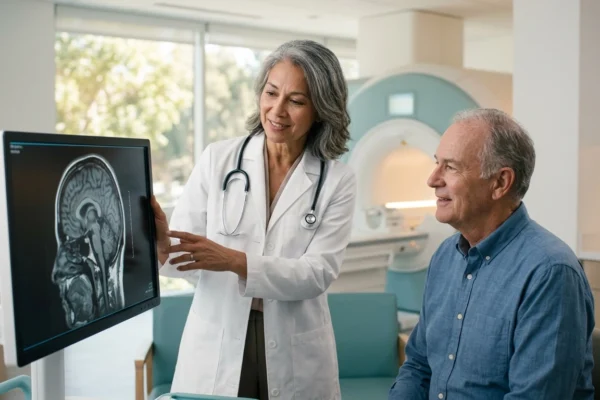
For residents in Pasadena seeking clarity on their medical testing plan, professional guidance is essential. Dr. Cleo provides comprehensive consultations to help patients determine which tests are medically appropriate for their specific age and health history.
To discuss a personalized diagnostic strategy, individuals can schedule an appointment.
The Core Difference: Screening vs. Diagnostic Test
Key Characteristics of Each Approach:
- Goal: Early detection of silent diseases.
- Patient Status: Asymptomatic (no symptoms).
- Frequency: Periodic (e.g., annual or every 5-10 years).
- Example: A low-dose CT for a former smoker.
Diagnostic Test:
- Goal: Identifying the cause of a specific symptom.
- Patient Status: Symptomatic (experiencing pain, dizziness, etc.).
- Frequency: As needed based on clinical symptoms.
- Example: An MRI to investigate chronic back pain.
Quick Comparison of Medical Intent
| Feature | Preventive Screening | Diagnostic Investigation |
|---|---|---|
| Primary Trigger | Age or risk history | Specific new symptom |
| Main Objective | Early detection | Finding a definitive cause |
| Typical Tools | Low-dose CT, blood markers | Targeted MRI, High-res CT |
| Outcome | Risk assessment | Treatment plan |
Navigating Imaging: When a CT Scan is the Best Choice
Why Your Doctor Might Order a CT:
- Bone Evaluation: Identifying complex fractures or bone tumors.
- Emergency Trauma: Checking for internal bleeding after a fall.
- Lung Health: Detecting nodules or signs of pneumonia.
- Vascular Issues: Finding blockages in blood vessels (CTA).
- Speed: Getting results in as little as 1-5 minutes.
Low-Dose CT (LDCT) for Lung Health
When an MRI Becomes Necessary for Accuracy
Top Reasons to Choose MRI:
- Neurological Clarity: Visualizing the brain and spinal cord.
- Joint and Muscle Health: Checking for ligament tears or cartilage wear.
- Soft Tissue Contrast: Identifying tumors in organs like the liver or prostate.
- Zero Radiation: Ideal for long-term monitoring of chronic issues.
Technical Specs: CT vs. MRI
| Feature | CT Scan | MRI |
|---|---|---|
| Technology | X-ray technology | Magnetic fields / Radio waves |
| Scan Duration | 1-5 minutes | 30-60 minutes |
| Best For | Bone, Lungs, Emergency | Brain, Spine, Joints |
| Noise Level | Quiet | Very loud (thumping) |
| Radiation | Low to moderate | None |
The Role of a Laboratory Test in Modern Diagnosis
Common Labs That Supplement Imaging:
- Kidney Function Tests (Creatinine): Required before using contrast dye in scans.
- Inflammatory Markers (CRP): Helps determine if a “spot” on a scan is an active infection.
- Blood Sugar (A1C): Essential for evaluating metabolic health alongside abdominal scans.
- Biomarkers: Tracking specific proteins that may suggest the need for a more detailed MRI.
Specialized Health Focus for Pasadena Residents
Diagnostic Priorities for Seniors 65+:
- A quick CT scan to measure plaque buildup in coronary arteries.
- Helps predict cardiac risk before symptoms occur.
Cognitive Support (Brain MRI):
- Evaluating brain volume and ruling out vascular issues.
- Crucial for managing long-term memory health.
Lung Monitoring:
- Standardized protocols for tracking any changes in lung tissue.
- Essential for residents with a history of environmental exposure.
Safety and Comfort Checklist
- Contrast Safety: Ensure you have had a recent laboratory test for kidney function.
- Metal Check: Remove all jewelry and inform the technician about any implants (for MRI).
- Allergy Disclosure: Tell your doctor if you have ever reacted to imaging dyes.
- Medication Review: List any supplements or treatments you are currently taking.
- Comfort Needs: Ask for “wide-bore” options if you feel uneasy in small spaces.
Conclusion: Making Informed Health Decisions
Frequently Asked Questions
What is the main difference between a medical screening and a diagnostic test?
A screening is a preventive measure performed on individuals who show no symptoms to detect potential health issues early. In contrast, a diagnostic test is used to investigate specific symptoms and confirm a clinical diagnosis when a problem is already suspected.
Why would a physician choose a CT scan over an MRI?
CT scans are often the preferred modality for emergency diagnostic imaging because they are exceptionally fast and capture fine details of bone and lung structures. Physicians typically choose this method for acute trauma or when assessing cardiovascular health to check for artery calcification.
Is an MRI safer than a CT scan for long-term health monitoring?
Since an MRI uses magnetic fields instead of ionizing radiation, it is often a safer choice for repeated evaluations of soft tissue health and neurological conditions. However, your medical team will determine medical necessity based on whether the detail provided by the scan outweighs any potential risks.
Why is a laboratory test often required before a diagnostic imaging procedure?
A diagnostic blood test is frequently used to evaluate your kidney function before the administration of contrast agents during a scan. Integrating a laboratory test with your imaging ensures that your body can safely clear any dyes used to highlight internal structures.
Is a preventive health screening necessary if I feel perfectly healthy?
Yes, certain health screenings are vital for early detection of issues that do not yet have symptoms, such as lung nodules or heart plaque. Following established age-related guidelines ensures you receive the most benefit from preventive medicine while avoiding the risks of overdiagnosis.
What should I do if my imaging results show an incidental finding?
An incidental finding is a minor abnormality discovered during a scan performed for a different reason. Your physician will review these results against standardized clinical protocols to determine if follow-up is required or if the finding is a harmless anatomical variation.