The information on this website is for informational purposes only and is not a substitute for professional medical advice, diagnosis, or treatment. Always seek the advice of your physician regarding any medical condition. Never disregard professional medical advice or delay seeking it because of something you have read here. If you have a medical emergency, call 911 immediately.
The A1c test is a simple blood test that shows your average blood sugar over the past three months. It is also called the hemoglobin A1c or glycated hemoglobin test. The result comes back as a percent. A normal A1c is below 5.7%. A result of 5.7% to 6.4% means prediabetes. A result of 6.5% or higher on two tests means diabetes. For most adults with diabetes, the goal is an A1c under 7%.
People in Pasadena who want help reading these numbers can talk with Dr. Cleo Tsolakoglou-Williams, a family medicine doctor who offers both in-home visits and virtual appointments. She can review your results with you and answer questions about your next step.
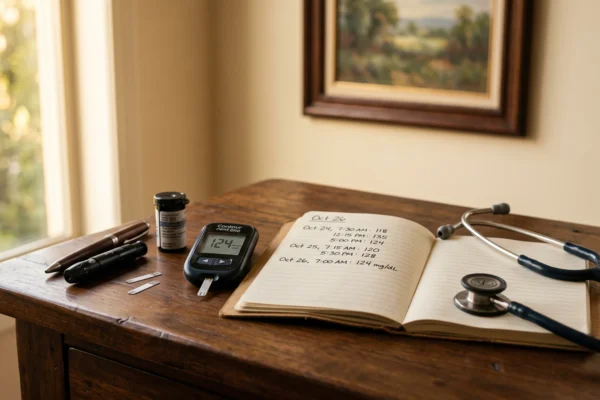
What the A1c Test Actually Measures
How Sugar Sticks to Hemoglobin
This is why the A1c glucose test gives a bigger picture than a single finger-stick reading. A home meter shows your blood sugar at one moment. The A1c shows an average across many weeks. Both are useful, but they answer different questions.
Why It Shows Three Months
Understanding Your A1c Range
Normal, Prediabetes, and Diabetes Numbers
- Normal: below 5.7%
- Prediabetes: 5.7% to 6.4%
- Diabetes: 6.5% or higher
What the Numbers Mean If You Are 65 or Older
A1c for Type 2 Diabetes: Setting a Goal
The 7% Target
When Your Goal May Be Higher
How A1c Connects to Daily Blood Sugar
Estimated Average Glucose (eAG)
Checking Blood Sugar at Home
A1c and Everyday Diabetes Management
Simple Steps That Lower A1c
When Diabetes Treatment May Change
When A1c Results Can Be Off
Conditions That Change the Result
Getting the Right Test
How Often You Need Testing
Frequently Asked Questions
What is the A1c test for type 2 diabetes?
The A1c test is a blood test that shows your average blood sugar over about three months. For type 2 diabetes, it is used both to diagnose the condition and to track how well your plan is working. You do not need to fast before the test.
What A1c should a type 2 diabetic have?
For most adults with type 2 diabetes, the goal is an A1c under 7%. Some people are given a slightly higher goal, such as 7% to 8%, based on age and other health problems. Your doctor sets the target that is safest for you.
What blood sugar level is ok for a type 2 diabetic?
Common home targets are 80 to 130 mg/dL before a meal and less than 180 mg/dL two hours after you start eating. Blood sugar under 70 mg/dL is considered low. Your own targets may differ, so ask your care team.
What is normal HbA1c for a 70 year old?
The same cutoffs are used to diagnose diabetes at any age, so an HbA1c below 5.7% is normal. But once diabetes is diagnosed, an older adult may be given a slightly higher personal goal to avoid low blood sugar. This is decided case by case.
What is a high A1c level for type 2 diabetes?
An A1c of 6.5% or higher points to diabetes. If you already have diabetes, a number above your set goal (often above 7%) is considered high and may lead your doctor to adjust your plan. Higher A1c over many years raises the risk of complications.
What is the danger zone for HbA1c?
There is no single cutoff for danger, but the higher your A1c stays over the years, the greater the risk of eye, kidney, nerve, and heart problems. Keeping your A1c near your goal lowers that risk. Talk with your doctor if your number keeps climbing.