The information on this website is for informational purposes only and is not a substitute for professional medical advice, diagnosis, or treatment. Always seek the advice of your physician regarding any medical condition. Never disregard professional medical advice or delay seeking it because of something you have read here. If you have a medical emergency, call 911 immediately.
One in 5 Americans will develop skin cancer by the age of 70. Annual skin cancer screenings for adults over 50 are vital for early detection, as this practice significantly increases the likelihood of successful treatment. According to the study, regular professional skin checks are the most effective way to identify malignant growths before they become invasive.
Furthermore, the Centers for Disease Control and Prevention (CDC) highlights that skin cancer is one of the most preventable forms of cancer, making daily sun protection and clinical vigilance essential.
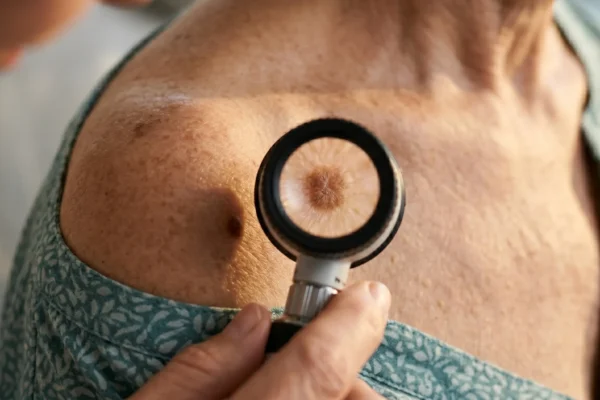
Why Annual Skin Cancer Screening Matters After 50
When you reach this milestone, your skin’s baseline changes, and professional assessment becomes the best way to distinguish between harmless age-related spots and developing malignancies.
The Biology of Aging Skin
Additionally, the dermis-the middle layer of skin-begins to lose structural proteins like collagen and elastin. This thinning makes the skin more susceptible to environmental stressors. Think of your skin as a natural barrier that has been worn down by years of the Southern California sun. Regular screening acts as a check-up for this barrier, ensuring that any structural weakness or cellular irregularity is caught before it compromises the tissue.
The Science of Cumulative Sun Memory
Data indicates that rates of skin cancer diagnosis rise steadily after age 50. This confirms that regular clinical screening is a necessary health baseline rather than an optional precaution. By establishing a professional record of your skin, you and your doctor can detect subtle transitions in pigment or texture that might otherwise go unnoticed.
Understanding the UV Environment of the San Gabriel Valley
Daily UV Exposure
This is often referred to as “incidental exposure,” and it accounts for a significant portion of skin damage over the decades. It is not always about the beach day; it is about the thousands of small, unnoticed exposures that happen during your morning walk, your gardening, or your commute.
Common Signs of Skin Cancer
Understanding the ABCDE Rule
| Letter | Sign | Description |
|---|---|---|
| A | Asymmetry | One half of the mole does not match the other. |
| B | Border | The edges are ragged, notched, or blurred. |
| C | Color | The color varies, including shades of brown, black, or red. |
| D | Diameter | The growth is larger than 6mm (pencil eraser size). |
| E | Evolving | The spot changes in size, shape, or color over time. |
Basal Cell and Squamous Cell Patterns
Your Routine and Professional Care
Monthly Self-Examination Routine
- Check between your toes and on the soles of your feet for hidden spots.
- Document any new or changing spots with photographs to show your dermatologist.
- Ask a partner to help you examine areas you cannot see directly.
Nutrition and Skin Integrity
While nutrition is not a replacement for sunscreen, a well-hydrated body maintains skin elasticity better than a dehydrated one. Prioritize water intake, especially during the warmer months in Pasadena, to keep your skin plump and resilient against environmental insults.
Daily Protection Strategies
- Apply a broad-spectrum sunscreen: Use SPF 30 or higher every single day. Apply it to all exposed areas, not just your face.
- The Two-Finger Rule: Use enough product to cover two fingers’ length for your face and neck to ensure adequate coverage.
- Wear wide-brimmed hats: This is the most effective way to protect your ears and the back of your neck-two areas where skin cancer frequently develops.
- Seek shade: Plan your outdoor activities around the peak UV window-typically between 10 a.m. and 4 p.m.
- Prioritize the shaded side of the street: While walking in Pasadena, choosing the shaded side significantly reduces your direct UV intake.
Addressing Common Skin Myths
- Darker Skin Tones: Everyone can develop skin cancer, regardless of melanin levels. Melanoma can appear on non-exposed areas, such as the soles of the feet.
- Tanning Beds: These devices deliver concentrated UV radiation that accelerates aging and cancer risk. Avoid them entirely.
- Cloudy Days: UV rays penetrate clouds easily. You should wear sun protection even when the sky is overcast.
If it has been more than one year since your last professional skin check, now is the time to prioritize your health. Schedule an appointment to establish your baseline and protect your skin for the years ahead.
Frequently Asked Questions
How often should I get a professional skin cancer screening after 50?
You should schedule a professional skin cancer screening with a dermatologist at least once a year. Regular clinical exams are crucial for early detection, especially if you have a history of significant sun exposure or a family history of melanoma.
What are the early signs of skin cancer I should look for?
Look for any new, changing, or non-healing spots, as well as moles that follow the ABCDE rule—asymmetry, irregular borders, multiple colors, diameter changes, or evolution in size. If a lesion itches, bleeds, or changes shape, you should consult a skin cancer dermatologist immediately.
Does skin cancer affect people with darker skin tones?
Yes, skin cancer can affect anyone, regardless of skin tone or melanin levels. While darker skin provides some natural protection, it is still susceptible to malignancies, particularly in areas that are not typically exposed to the sun, such as the soles of the feet or palms.
Can I prevent skin cancer even if I have existing sun damage?
While you cannot reverse past UV damage, consistent daily sun protection can prevent further cellular mutations. Using broad-spectrum sunscreen and avoiding peak UV hours are the most effective ways to protect your skin’s health and reduce your risk moving forward.
What is the most common type of skin cancer?
Basal cell carcinoma is the most frequently diagnosed form of skin cancer. While it is typically slow-growing and rarely spreads to other organs, it requires professional diagnosis and treatment to prevent it from damaging surrounding tissues.